
How to Prepare for Making Tax Digital (MTD) as a UK Small Business & Sole Trader

Signature: 78JAnyvL7BMwcLCLLKWCuizhf8PdbSORDT+OxbS9TZhNvZB0p6Etl+hCB+cFaWQQX2rZitbbpIWxPbO4sB+g0cXZ5eVARIEDBzrWA7LVDEZs0m9jLDweOacAnd9g930IJpy/ITpbbibOPnEmpDZ9VEDCpU27bXl23oxFqxrCO0qm4lSYAkdSFfYhp7rXwAJ+M6Y2OHYlQ6UY+OjlLgLLRbZlb9I2AuP2mqyNzb+yaJ8c5dignYmAvWJpXLx3qNOkzNZC+ow9XKUd8OG9uAmFyo/qds5veV29DRRCrO6sIaVXIsZQEhGke3TQHZ3SoSdfkc18FfL8+QEapTUCZPFZ/kvuc1V2TMC8o3C4ceC0nU9M+5tUsFapzTS96QP4XnsKxpCUI5bs64Ud1oynSyb1myELpn/h4SuiylHO6qTKem7IU+T4PqXgSMWxvIrQH4HUTkKrZz9vX8QCqTJ7ZzPStCe8lI6RVJeh+eVf39KVGvyseCQyrVuSgA+VxtbdSc0Fwe2YuauyiwusMqa7vYp15HLZ5CkPCOOc2IfCrzNncm5Iju79qO1QJCbIdLYEsqY//rvMHEVO/NbsPeaO3wo8Vh9DnUu8P9U+IvAkUPRbvsaBH5WMRAHE34/p+hcN1iqCRupuLzeVHVGqNRBtdkFa+BMdNyXRuNO4JHDVNIx5BoY6qu+RGCL8qVi1/zz2vsLtQtmowjCg+wznPR8//SXt44GGeJ1hWcEkDvfvfHsj/lMwsatY6zeNkOWt3a3HIlx9s3t/8HLD0E8bORedoCLQ1IJZdXi0cczFPGBr8EvOb95n/msVudXPepjNhEA8/NgbXFWBoUbsS+6qhrojN//j0FS/9xiRALqfCqP8aSYRdSphvdEtxOqx9d3/1OZstwNsaDFgSfI6JAWbfuikt+U1d38AiuBYqubJopn+tDLU+NGoeTWyT2S6/ojf0/5fYay/BdYDXf4RBlVzz6sW9kxBMq5wGrp4FGF9DEtZUES3zIc=
Making Tax Digital (MTD) for Income Tax requires UK sole traders and landlords earning over £50,000 to keep digital records and submit quarterly updates using HMRC-recognised software. The threshold lowers to £30,000 from April 2027. Paper records and traditional spreadsheets alone are no longer compliant.
What is Making Tax Digital for Income Tax (MTD ITSA)?
Making Tax Digital (MTD) is HM Revenue & Customs’ (HMRC) initiative to modernise the UK tax system. Under MTD for Income Tax Self Assessment (ITSA), traditional annual tax filing is replaced by digital record-keeping and four quarterly updates submitted directly via HMRC-approved software.
Mandatory Phase-In Deadlines & Thresholds:
- 6 April 2026: Applies to sole traders and landlords with a qualifying gross income over £50,000.
- 6 April 2027: Expands to include self-employed individuals earning over £30,000.
- 6 April 2028: Mandate planned for incomes over £20,000.
Key Rule: The threshold applies to your gross turnover (total sales/income before deducting business expenses), not your net profit.
What Software is Approved for Making Tax Digital?
To stay compliant with HMRC, small businesses must use HMRC-recognised MTD software capable of storing digital records and linking directly to HMRC’s API.
Top HMRC-Approved MTD Software for Sole Traders:
| Software Name | Best For | Standout Features |
| FreeAgent | Freelancers & Small Business | Free for NatWest/RBS business account holders, easy invoicing. |
| Xero | Growing Small Businesses | Excellent bank feeds, automated reconciliation, multi-user. |
| QuickBooks | Mobile Sole Traders | Best receipt-scanning mobile app and mileage tracking. |
| Sage Sole Trader | Simple Bookkeeping | Low-cost entry point specifically designed for MTD ITSA. |
Can I Still Use Excel or Spreadsheets?
No, standalone paper or unlinked spreadsheets are non-compliant. You can only use spreadsheets if they are connected to HMRC systems using specialized Bridging Software.
How to Switch to Digital Tax Record Keeping: Step-by-Step
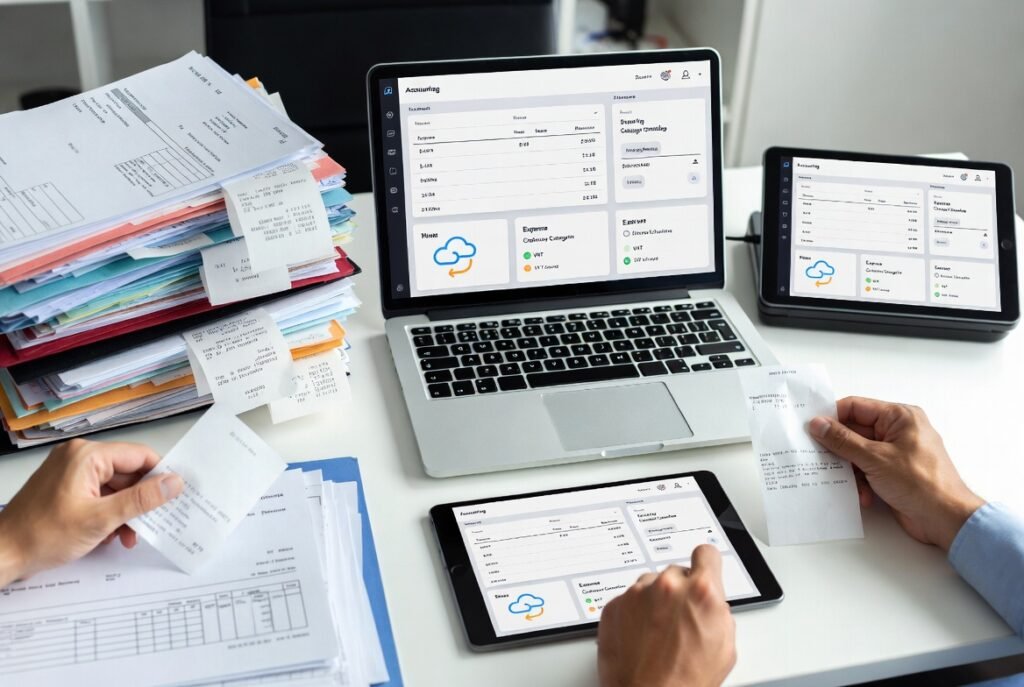
Transitioning from manual receipt tracking to a digital workflow requires a few strategic steps:
Step 1: Open a Dedicated Business Bank Account
Separate your personal and business expenses. Connecting a business bank account to your software enables automatic bank feeds, eliminating manual data entry errors.
Step 2: Choose and Configure Your MTD Software
Select an HMRC-recognised tool based on your business volume. Connect your business bank account and set up expense categories matching standard SA103 tax forms.
Step 3: Digitise Receipts on the Go
Ditch physical receipts. Use mobile app features (like receipt snapping) to upload digital copies instantly. HMRC accepts digital photo receipts provided the date, supplier, and amounts are clear.
Step 4: Perform Monthly Bank Reconciliations
Instead of waiting until year-end, reconcile your transactions monthly. Match incoming client payments and outgoing expenses against bank statements in real-time.
MTD ITSA Quarterly Submission Deadlines
Instead of a single Self-Assessment return on 31st January, MTD requires four quarterly submissions:
- Quarter 1 (6 April – 5 July): Due 5 August
- Quarter 2 (6 July – 5 October): Due 5 November
- Quarter 3 (6 October – 5 January): Due 5 February
- Quarter 4 (6 January – 5 April): Due 5 May
Following the four updates, you will submit a Final Declaration by 31st January to confirm claims, tax adjustments, and final payments.
Frequently Asked Questions (AEO/Voice Search Block)
Q: What is the penalty for non-compliance with MTD for Income Tax?
HMRC uses a points-based penalty system. Missing a quarterly update deadline incurs a penalty point. Reaching the points threshold results in a financial fine (typically £200).
Q: Is Making Tax Digital mandatory for sole traders earning under £30,000?
Not currently. Voluntary sign-up is permitted, but mandatory compliance for under £30k is scheduled for future expansion (expected 2028 for £20k+).
Q: Does MTD for VAT cover MTD for Income Tax?
No. MTD for VAT and MTD for Income Tax are distinct HMRC systems. Being registered for MTD VAT does not automatically submit your personal income tax updates.