Exploring Next-Gen Embedded Tech, Intelligent Spaces, Digital Detox, and Web Innovations
Exploring Next-Gen Embedded Tech, Intelligent Spaces, Digital Detox, and Web Innovations
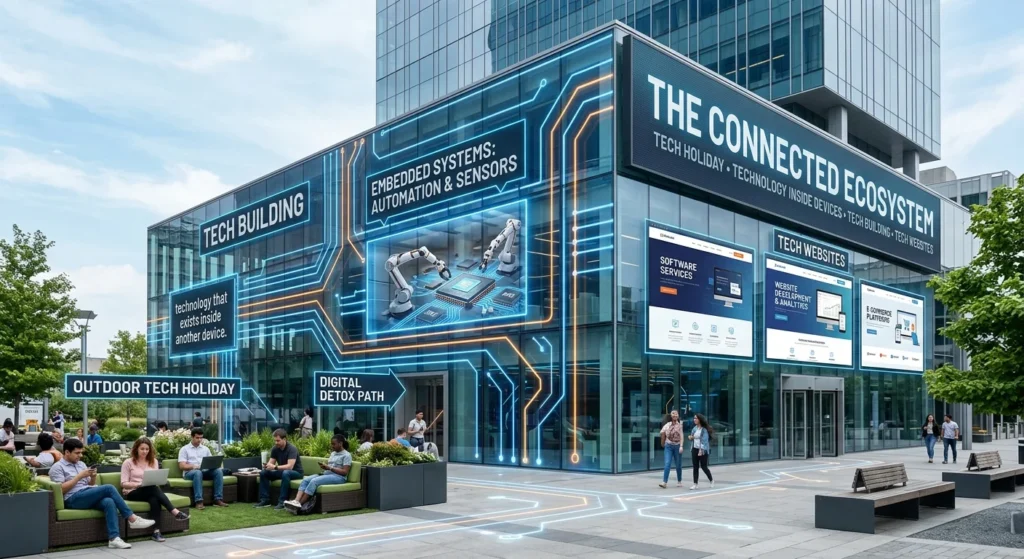
The global technology landscape is shifting from fragmented solutions to fully integrated digital environments. Today, the devices we carry, the buildings we inhabit, and the digital platforms we access daily rely on interconnected architecture. Understanding how specialized hardware, intelligent structures, and web platforms communicate is key to navigating the next wave of digital transformation.
Tech Holiday: Redefining Wellness and Connectivity in a Hyper-Connected Era
A tech holiday bridges the gap between digital disconnection and smart leisure. As connectivity becomes ubiquitous, individuals and industries are adopting new approaches to balance digital exposure.
- Intentional Digital Disconnection: High-demand professionals utilize tech holidays as structured breaks from screens, notifications, and workplace tools to mitigate digital fatigue and mental overload.
- Tech-Assisted Travel Planning: Modern travel relies on automated booking engines, AI travel assistants, and IoT-enabled hotel spaces that deliver personalized guest experiences with zero manual friction.
- Portable Travel Gear: High-tech personal items—such as portable solar chargers, compact satellite communicators, and smart translation hardware—provide safety and self-sufficiency off the grid.
Technology That Exists Inside Another Device: The Invisible Force of Micro-Computing
Behind every smart product is technology that exists inside another device—primarily microcontrollers, field-programmable gate arrays (FPGAs), and specialized chipsets that run dedicated software without requiring a full desktop operating system.
Key Architecture of Embedded Hardware
- Application-Specific Microprocessors: Custom processors built exclusively for targeted tasks, such as signal processing or sensor management.
- Real-Time Operating Systems (RTOS): Micro-OS platforms designed to execute instructions with strict timing constraints and near-zero latency.
- Sensor Networks: Integrated arrays that convert environmental signals (heat, motion, pressure) into actionable digital metrics.
Industry Applications
- Consumer Electronics: Smartwatches, drone stabilization systems, and digital cameras rely on internal co-processors for instant data rendering.
- Industrial Automation: Robotics and assembly line sensors use embedded boards to execute automated quality control in real time.
- Healthcare Systems: Portable diagnostic tools and medical implants depend on low-power embedded processors for continuous monitoring.
Tech Building: The Rise of Autonomous Architecture
A tech building combines structural engineering with Internet of Things (IoT) frameworks to transform concrete structures into adaptive, self-regulating environments.
Benefits of Modern Smart Facilities
- Lower Operational Costs: Predictive energy consumption models significantly reduce monthly utility expenses.
- Structural Longevity: Embedded sensors monitor concrete strain, plumbing pressure, and electrical loads, flagging repairs before breakdowns happen.
- Adaptive Workspaces: Real-time occupancy tracking helps facility managers reconfigure floor plans based on actual usage patterns.
Tech Websites: The Gateway to the Digital Economy
Modern tech websites serve as critical hubs for software distribution, cloud management, technical publication, and online services. Building scalable digital platforms requires balancing technical performance with intuitive design.
Pillars of Web Excellence
- Performance Optimization: Lightning-fast load times, lightweight code bases, and optimized asset delivery to satisfy both users and search crawlers.
- Structured Data and Schema: Clear metadata architectures that help search engines classify, index, and display complex technical topics accurately.
- Scalable Architecture: Cloud-native hosting structures capable of handling high traffic spikes without downtime or speed degradation.